Home > Blog > Leveraging AI for Conflict Resolution: Opportunities and Ethical Considerations
Conflict is as old as human relationships. The tools we use to navigate it, however, are changing rapidly.
Artificial intelligence has moved beyond novelty. In just the past year, it has become part of everyday work, helping professionals analyze information, generate ideas, summarize complex discussions, and make better-informed decisions. As these tools continue to improve, it’s natural to ask what role they should play in one of the most human challenges we face: conflict.
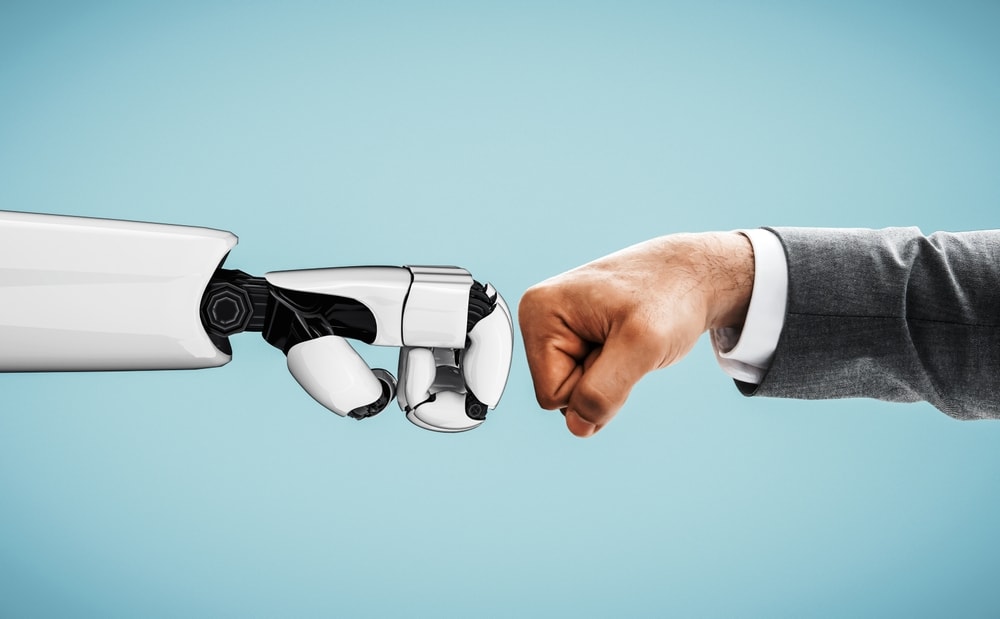
At Pollack Peacebuilding, we see AI as a valuable partner, not a substitute for people. When used thoughtfully, it can reduce administrative burdens, surface patterns that might otherwise go unnoticed, and make conflict resolution more accessible across teams and cultures. But lasting resolution has never depended on technology alone. It depends on trust, empathy, curiosity, and the willingness to engage with one another.
The opportunity isn’t to replace the human side of conflict resolution. It’s to strengthen it.
Understanding AI in Conflict Resolution
When people hear “AI in conflict resolution,” they sometimes imagine software replacing mediators or making decisions on behalf of organizations. That’s not where the field is headed, nor is it where it should go.
Today’s AI is best understood as an intelligent assistant. It can organize large amounts of information, identify communication patterns, summarize lengthy conversations, translate languages in real time, and help leaders prepare for difficult discussions. Recent advances over the last year have also made AI significantly better at synthesizing complex information and exploring multiple perspectives, making it a useful tool for preparation, documentation, and strategic planning.
These capabilities create meaningful opportunities, particularly in workplace settings where conflicts often involve large teams, lengthy communication histories, or geographically distributed employees. AI can help leaders spend less time sorting through information and more time focusing on the conversations that matter.
Still, capability should never be mistaken for judgment. Even the most advanced AI cannot understand the lived experiences, emotions, or relationships that shape conflict. It cannot recognize the hesitation before someone shares a difficult truth, sense when trust has quietly eroded, or appreciate the organizational history behind a disagreement. It processes patterns exceptionally well, but people are far more than patterns.
As AI becomes more capable, the role of skilled facilitators becomes even more important. Technology can provide context, organize information, and suggest possibilities, but it cannot build trust between people or create the psychological safety required for honest dialogue.
This is why human oversight remains essential. AI should inform decisions, not make them. Experienced mediators, leaders, and conflict resolution professionals provide the emotional intelligence, ethical judgment, and contextual understanding that no technology can replicate.
Rather than asking whether AI belongs in conflict resolution, organizations should be asking a different question: How can AI support people without replacing the human skills that make meaningful resolution possible?
That question is shaping the next generation of conflict management, and it’s already influencing how organizations approach workplace communication, leadership, and peacebuilding.
AI Is Changing How We Prepare for Conflict, Not How We Resolve It
As AI has become more capable, its role in conflict resolution has expanded. Organizations are using it to streamline workflows, analyze communication patterns, improve accessibility, and support better decision-making. Rather than replacing human expertise, AI is helping professionals spend less time on administrative tasks and more time on people tasks, primarily engaging with people.
Here are a few of the ways AI is already influencing the field:
Online Dispute Resolution (ODR)
Digital dispute resolution has been around for years, but AI is making these platforms more adaptive and responsive. Organizations can now use AI to help guide participants through structured conversations, summarize issues, and identify areas of agreement before a mediator ever joins the discussion. Human intervention remains essential when conversations become emotionally complex, but AI can help make the process more efficient from the start.
Scenario Planning and Decision Support
Today’s AI models are increasingly capable of synthesizing large amounts of information and evaluating multiple possible outcomes. Researchers, policymakers, and organizations are using these capabilities to explore negotiation scenarios, identify potential risks, and better prepare for difficult conversations. While AI can help broaden perspective, experienced leaders still provide the judgment needed to weigh competing priorities and human realities.
Language Translation and Accessibility
Communication breaks down when people cannot fully understand one another. Advances in real-time translation have made it easier for individuals from different linguistic and cultural backgrounds to participate more fully in mediation and dialogue. By reducing language barriers, AI can create more inclusive conversations and ensure more voices are heard.
Pattern Recognition and Early Awareness
Conflict rarely appears overnight. More often than not, it develops gradually through repeated misunderstandings, unmet expectations, or declining trust. AI can analyze large volumes of communication to identify trends that may otherwise go unnoticed, giving leaders an opportunity to address issues before they become larger organizational challenges.
Taken together, these developments reflect an important shift. AI is becoming increasingly valuable at organizing information, recognizing patterns, and supporting preparation. The conversations themselves, however, still depend on human relationships.
That’s where our work begins.
How We Integrate AI at Pollack Peacebuilding
At Pollack Peacebuilding, we use AI intentionally and selectively. We don’t see technology as a replacement for mediation, coaching, or dialogue. Instead, we use it to create more space for those uniquely human interactions.
Every engagement begins the same way it always has, with people.
Through confidential interviews, active listening, and thoughtful questioning, we work to understand not only what happened, but why it happened. We look beyond the immediate disagreement to uncover the underlying needs, assumptions, communication patterns, and organizational dynamics that are sustaining the conflict.
AI helps us support that process, not define it.
We use AI to organize information, identify recurring themes across interviews, summarize research, streamline documentation, and reduce administrative work. These efficiencies allow our consultants to spend more time listening, asking better questions, and helping clients navigate difficult conversations with greater clarity and confidence.
For organizations with distributed or hybrid teams, AI can also support communication by helping identify recurring breakdowns, summarize complex discussions, and improve collaboration across time zones. Used responsibly, these tools help leaders respond more quickly while ensuring that meaningful conversations remain centered on people rather than technology.
Throughout every engagement, human judgment remains the guiding force. AI can help illuminate patterns, but only people can interpret them with the empathy and nuance that meaningful conflict resolution requires.
Preparing Leaders for an AI-Enabled Workplace
As AI becomes a normal part of organizational life, leaders face a new challenge: learning not only how to use AI effectively, but also when not to rely on it. This is why our training continues to evolve alongside the technology.
In our workshops and leadership programs, we help organizations develop the judgment needed to integrate AI responsibly. This includes understanding where AI can improve efficiency, where it introduces new risks, and when human conversation should always take precedence.
Increasingly, these aren’t technical skills; they’re leadership skills.
Organizations that thrive won’t be those that automate the most. They’ll be the ones that thoughtfully combine technological capability with emotional intelligence, sound judgment, and cultures built on trust.
AI’s Role in Modern Peacebuilding
As AI becomes more integrated into everyday work, its greatest contribution to peacebuilding isn’t making decisions but rather helping people make better-informed ones.
When used responsibly, AI can improve awareness, broaden perspective, and reduce administrative burdens that often distract leaders from the conversations that matter most. These capabilities don’t replace human expertise; they create more opportunities for it to have meaningful impact.
Seeing Conflict Earlier
Many workplace conflicts don’t begin with a dramatic confrontation. They develop gradually through missed expectations, unclear communication, shifting team dynamics, or small moments of distrust that accumulate over time.
Because AI can process large volumes of information quickly, it can help organizations identify patterns that might otherwise go unnoticed. Communication trends, recurring themes in employee feedback, or changes in organizational sentiment may provide early signals that leaders should pay closer attention.
These insights don’t tell us why conflict exists, nor do they prescribe the right solution. They simply give leaders an opportunity to ask better questions sooner before misunderstandings become entrenched and relationships begin to deteriorate. Early awareness creates more opportunities for thoughtful intervention.
Supporting Better Decisions
Conflict often requires leaders to navigate competing priorities with incomplete information. AI can help organize complex data, summarize diverse viewpoints, and explore multiple scenarios, allowing decision-makers to approach difficult conversations with greater clarity.
Rather than replacing strategic thinking, AI strengthens preparation. It can highlight perspectives that deserve additional consideration, surface assumptions that may otherwise be overlooked, and help leaders evaluate the potential consequences of different approaches. Used well, AI expands the information available for decision-making while leaving the decisions themselves where they belong, with people.
Expanding Access and Inclusion
Conflict resolution is most effective when everyone has the opportunity to participate fully.
Advances in real-time translation and accessibility tools are making that possible for more organizations. Language differences, geographic distance, and communication barriers no longer have to prevent meaningful dialogue. AI can help participants understand one another more clearly, allowing conversations to focus on shared understanding instead of logistical obstacles.
These technologies also hold promise for improving accessibility for individuals with different communication needs, making mediation and dialogue more inclusive than ever before. Technology cannot create empathy, but it can remove barriers that prevent empathy from emerging.
Giving Mediators More Time to Be Human
One of AI’s greatest strengths isn’t facilitating conversations; it’s reducing the administrative work surrounding them.
Preparing meeting summaries, organizing interview notes, reviewing documentation, identifying recurring themes, and compiling background information all require significant time. AI can streamline many of these tasks, allowing mediators and organizational leaders to focus their attention where it matters most: listening carefully, asking thoughtful questions, and helping people move forward together.
The intrinsic value of AI isn’t that it replaces human interaction. It’s that it creates more space for it. As these tools continue to evolve, we expect their capabilities to grow. The principles guiding their use, however, should remain remarkably consistent: technology should increase our capacity for understanding, not diminish our commitment to one another.
That balance will shape the future of conflict resolution.
The Promise and Responsibility of AI in Conflict Resolution
Every new technology creates both opportunity and responsibility. AI is no exception. Its ability to process information quickly, identify patterns, and support decision-making can make conflict resolution more effective. But like any tool, its value depends on how it’s used.
The goal isn’t to ask whether AI is “good” or “bad.” It’s to understand where it adds value, where its limitations matter, and how organizations can integrate it without losing sight of the people at the center of every conflict.
Where AI Creates Value
Used thoughtfully, AI can strengthen conflict resolution in meaningful ways. It can reduce the administrative work that often consumes leaders’ time, allowing them to focus on listening, coaching, and facilitating productive conversations. It can organize large amounts of information, summarize complex discussions, and surface patterns that might otherwise take hours, or even days, to recognize.
AI also expands access to conflict resolution by helping bridge language barriers, supporting geographically distributed teams, and making information more accessible across organizations.
Perhaps most importantly, AI gives leaders more time for the work only humans can do: building relationships, navigating complexity, and fostering trust. When technology handles routine tasks, people can devote more energy to meaningful dialogue.
Where Human Judgment Must Lead
As AI becomes more capable, it’s also becoming easier to rely on it too heavily. One of the greatest risks isn’t that AI makes mistakes; it’s that people stop questioning its recommendations.
AI can identify trends and generate remarkably useful insights, but it doesn’t understand organizational history, interpersonal dynamics, or the emotional realities that shape conflict. It cannot distinguish between what is statistically likely and what is ethically appropriate. Those decisions require human wisdom, contextual understanding, and accountability.
Organizations also face important questions around privacy, confidentiality, and governance. When sensitive workplace conversations involve AI, leaders need clear expectations about what information is being shared, how it’s is protected, and when AI should or shouldn’t be part of the process. Responsible implementation isn’t simply about choosing the right technology; it’s about creating policies that preserve trust while supporting innovation.
Bias also remains an important consideration. AI learns from existing information, which means it can unintentionally reflect historical biases or reinforce incomplete perspectives. Rather than accepting AI-generated insights at face value, organizations should treat them as one input among many, valuable for informing conversations, but never replacing critical thinking. Ultimately, AI should strengthen human judgment, not substitute for it.
A Human-Centered Future
The future of conflict resolution won’t be defined by technology alone. It will be shaped by leaders who know how to combine technological capability with emotional intelligence, ethical decision-making, and authentic human connection.
Organizations that succeed won’t necessarily be those with the most advanced AI tools. They’ll be the ones that create cultures where technology supports better conversations instead of replacing them.
That’s the future we believe in. One where AI helps people prepare more thoughtfully, communicate more effectively, and spend less time on administrative work, but where trust is still built one conversation at a time.
A Human-Centered Future for AI and Conflict Resolution
Artificial intelligence will continue to evolve. It will become faster, more capable, and more deeply integrated into the way organizations communicate, collaborate, and make decisions. As that happens, it’s tempting to focus on what AI can do.
We believe the more important question is what people should continue to do. Technology can organize information, uncover patterns, and expand access to knowledge. It can help leaders prepare for difficult conversations and reduce the administrative work that often pulls attention away from people. Used thoughtfully, these capabilities make conflict resolution more efficient and more accessible. But they don’t replace the qualities that make conflict resolution meaningful.
Trust cannot be automated. Empathy cannot be generated. Psychological safety cannot be delegated to an algorithm. Lasting resolution still depends on people who are willing to listen deeply, remain curious, and work through disagreement with honesty and respect. Ironically, the more capable AI becomes, the more valuable these uniquely human skills become.
At Pollack Peacebuilding, we embrace AI because it allows us to spend more time doing the work that matters most. By using technology to support research, organization, and preparation, we create more space for thoughtful dialogue, stronger relationships, and better decisions. AI enhances our work; it never defines it.
We believe the future of conflict resolution isn’t human or artificial intelligence. It’s the thoughtful integration of both, with technology supporting the process and people leading it every step of the way. This is how organizations build trust, strengthen relationships, and create workplaces where conflict becomes an opportunity for growth instead of division.
If your organization is exploring how to navigate conflict in an increasingly AI-enabled workplace, we’re here to help. Whether you’re strengthening leadership, improving communication, or building healthier team dynamics, our approach combines practical conflict resolution strategies with the human insight that lasting change requires. Schedule a free consultation to explore how Pollack Peacebuilding can help your team integrate AI thoughtfully while strengthening communication, leadership, and workplace relationships.