De-escalation Training for Retail Teams

Some of our Trusted Clients






Home > De-Escalation Training > De-Escalation Training for Retail Teams
On-Demand Training Course
- Approximately 90 minutes to complete
- Includes interactive practice exercises and multi-media lessons
- Includes Certificate of Completion
Need to enroll 10 or more participants? Request Bulk Order
Built Specifically for Retail Settings
This training is designed specifically for retail staff, floor associates, supervisors, store managers, loss prevention personnel, and customer service representatives who regularly navigate challenging customer interactions. Through scenario-based role-play exercises grounded in real-world retail environments, participants learn practical techniques for managing conflict while maintaining professionalism and customer trust.
The training emphasizes employee safety, customer satisfaction, and brand reputation while aligning with existing store policies and operational procedures. Programs are available nationwide through live virtual workshops and, where available, in-person delivery. Each workshop can be customized to reflect your organization’s specific customer service challenges, escalation risks, and workplace dynamics.
For organizations seeking broader workplace communication training, our De-Escalation Training Workshop provides a foundation that applies across industries. Teams focused specifically on customer-facing interactions may also benefit from our Customer Service De-Escalation Training program.
Why De-Escalation Training Matters in Retail
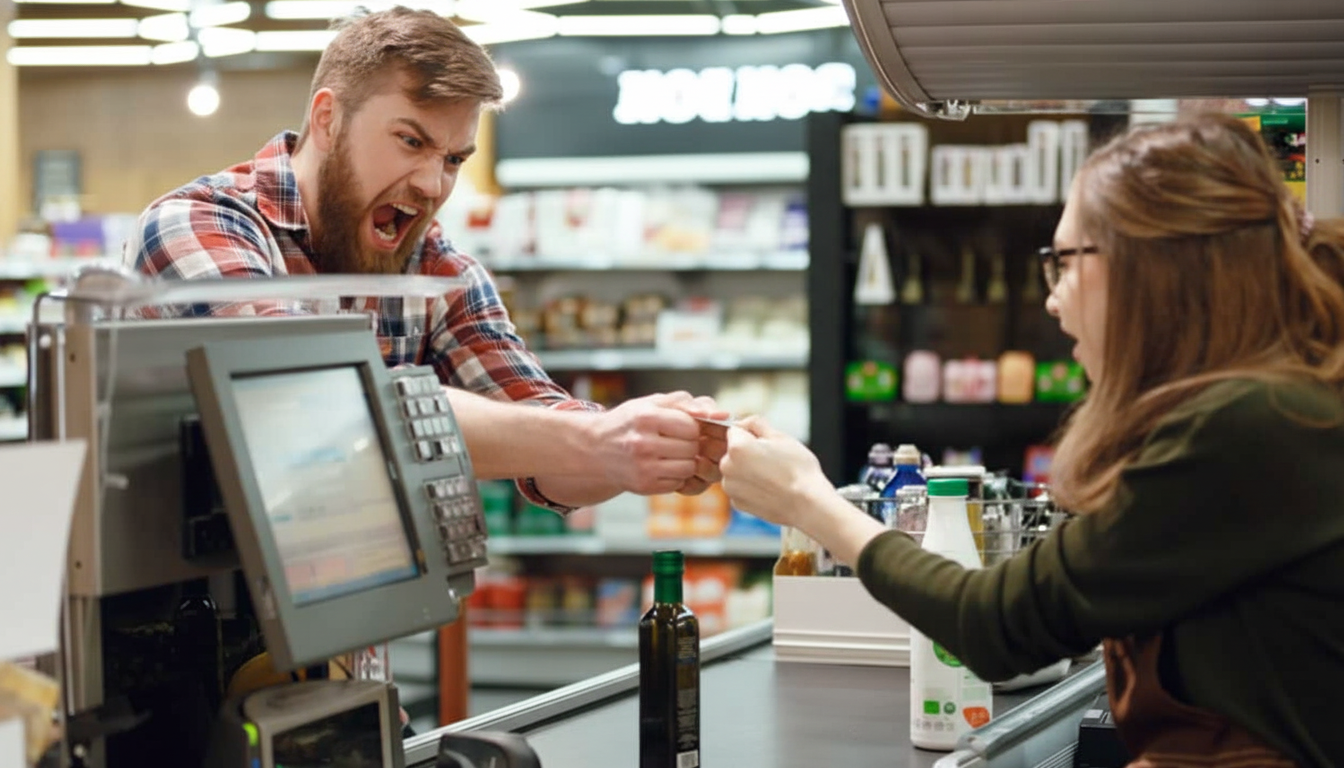
Retail employees operate in fast-paced environments where customer emotions can escalate quickly. Difficult customers, high-stress checkout lines, returns and refund disputes, theft-related tensions, policy enforcement conflicts, and employee fatigue during peak seasons all create opportunities for conflict.
When these situations are not managed effectively, they can lead to verbal abuse, workplace safety concerns, disruptive incidents, damaged customer relationships, and long-term harm to a store’s reputation. Even a single poorly managed interaction can impact customer loyalty and influence future purchasing decisions.
Effective de-escalation training helps retail employees remain calm under pressure, recognize early warning signs of escalation, and respond professionally before situations intensify. Employees learn how to lower emotional intensity, manage their own reactions, and guide interactions toward productive outcomes.
The result is a safer work environment, stronger employee confidence, improved customer experiences, and greater protection of the organization’s brand and reputation.
Who This Training Is For
This training is designed for frontline retail employees, floor staff, supervisors, store managers, loss prevention personnel, and customer service representatives who regularly interact with customers. Whether employees are managing routine customer questions or responding to high-stress situations, de-escalation skills help them maintain professionalism and confidence during challenging interactions.
The program is effective across a wide range of retail environments, including large retail chains, regional stores, small independent retailers, big-box locations, specialty retailers, and customer-facing service environments.
What Retail Teams Will Learn
Participants develop practical communication and de-escalation skills that can be applied immediately in day-to-day customer interactions. The training focuses on helping employees recognize escalation early, respond appropriately, and maintain safety while protecting customer relationships.
Participants learn how to:
- Recognize early escalation cues
- Conduct quick situational risk assessments
- Use active listening to lower emotional intensity
- Apply neutral language and tone control
- Manage personal space and body language effectively
- De-escalate tense customer interactions safely
- Set boundaries while maintaining professionalism
- Escalate situations appropriately using store protocols
These skills are practical, repeatable, and specifically designed for real-world retail settings.
Core Training Modules
Recognizing Customer Conflict & Conflict Psychology
The first step in successful de-escalation is recognizing when emotions are beginning to rise. This module helps participants identify early signs of agitation, understand common emotional triggers, and recognize patterns of escalating customer behavior before situations become more difficult to manage.
Participants learn foundational conflict psychology concepts and practice applying them through realistic retail scenarios. The focus is on helping employees intervene early and prevent escalation before it reaches a critical point.
Effective Communication & De-Escalation Techniques
Communication is often the most powerful de-escalation tool available to retail employees. This module teaches active listening, calm voice control, respectful pacing, personal space awareness, and non-aggressive body language techniques that help lower defensiveness and reduce emotional intensity.
Participants learn frameworks such as the HEARD model (Hear, Empathize, Acknowledge, Resolve, Diagnose) and the Defuse-Calm-Resolve approach, providing practical tools for managing challenging customer interactions while maintaining authority and professionalism.
Conflict Resolution Tactics for Customer Interactions
Once emotions begin to stabilize, employees need practical strategies for moving conversations toward resolution. This module focuses on negotiation language, offering controlled solution options, managing public interactions appropriately, and preventing repeat incidents.
Participants engage in realistic role-play exercises designed to mirror high-pressure retail encounters, giving them the opportunity to practice and refine their skills in a supportive learning environment.
Manager Track: Escalation Protocols & Leadership Intervention
Supervisors and managers often face unique challenges when customer interactions exceed frontline employees' authority levels. This module provides leaders with frameworks for intervening effectively without intensifying conflict.
Participants learn how to assign escalation responsibilities, protect employees during potentially volatile situations, coordinate with security or law enforcement when necessary, and document incidents according to organizational procedures and safety requirements.
Training Formats
We offer flexible training delivery options designed to fit operational schedules and organizational needs.
Available formats include:
- In-person simulation days
- Live virtual workshops
- Hybrid training programs
- Micro-learning reinforcement modules
Programs can be delivered as:
- Half-day workshops
- Full-day intensives
- Multi-session professional development programs
Safety, Legal & Risk Management Alignment
Effective de-escalation training is an important component of a proactive workplace safety strategy. Organizations that invest in de-escalation training demonstrate a commitment to protecting employees, customers, and business operations.
Our programs help retail organizations integrate de-escalation techniques into existing safety policies, clarify refusal and escalation protocols, reduce the risk of physical harm, improve workplace safety compliance, and support incident documentation processes.
Creating a positive and safe environment benefits both employees and customers while helping organizations manage risk more effectively.
Measuring Success
Organizations commonly evaluate the effectiveness of de-escalation training using a combination of operational, customer experience, and employee well-being metrics.
Common indicators include:
- Customer satisfaction score improvements
- Reduced customer complaints
- Lower incident frequency and severity
- Improved employee retention and well-being
- Stronger workplace morale
- Increased customer loyalty and repeat visits
What Makes Pollack Peacebuilding Different
Pollack Peacebuilding’s approach is grounded in social psychology, conflict resolution, and workplace peacebuilding principles. Rather than relying solely on scripts or one-size-fits-all responses, we focus on helping employees develop practical, sustainable communication skills they can use in real situations.
Every workshop emphasizes professionalism, emotional regulation, customer dignity, and workplace safety. Through realistic scenarios and evidence-based instruction, participants develop skills that extend beyond a single training session and become part of their long-term approach to customer interactions.
Our goal is simple: help retail teams defuse tense situations while protecting safety, preserving dignity, and strengthening customer relationships.

Dr. Jeremy Pollack
Ph.D. – Founder
He is a Certified Organizational Development Coach (CODC®), Certified Clinical Trauma Specialist-Individual (CCTS-I™), Certified Workplace Mindfulness Facilitator (CWMF™), and Associate Certified Coach (ACC) under the International Coaching Federation.
Every training program offered through Pollack Peacebuilding is grounded in his research and practical experience working with organizations across industries.




Frequently Asked Questions
Retail de-escalation training teaches employees how to recognize, prevent, and manage escalating customer interactions before they become disruptive or unsafe. Participants learn practical communication techniques, emotional regulation strategies, conflict resolution skills, and safety-focused response methods that help create better outcomes for both customers and staff.
Retail employees regularly encounter frustrated customers, refund disputes, policy enforcement conflicts, theft-related tensions, and other emotionally charged situations. De-escalation training equips employees with the tools to manage these interactions professionally while protecting customer relationships, workplace safety, and store reputation.
The training is designed for frontline retail employees, floor staff, customer service representatives, supervisors, store managers, and loss prevention personnel. Any team member who interacts with customers can benefit from learning practical de-escalation techniques.
Yes. Participants learn how to recognize early warning signs of escalation, lower emotional intensity through active listening and effective communication, set boundaries respectfully, and guide conversations toward productive resolutions without becoming defensive or confrontational.
Yes. While the training is not a substitute for security procedures, it helps employees recognize escalating behavior, maintain personal safety, communicate effectively during tense situations, and follow organizational escalation protocols when additional intervention is necessary.
Employees learn how to identify potential warning signs, assess situational risk, maintain appropriate personal space, use calming communication techniques, and follow escalation protocols. These skills can help reduce the likelihood of situations becoming disruptive or unsafe.
Participants learn practical skills including active listening, emotional regulation, conflict resolution, tone control, body language awareness, boundary setting, situational risk assessment, and professional response techniques for difficult customer interactions.
Yes. Training can be tailored to your organization’s policies, customer service expectations, store operations, and common escalation scenarios. Workshops can incorporate examples that reflect the situations your employees encounter most often.
Absolutely. The principles of de-escalation apply across a wide range of retail environments. Programs can be customized for national retailers, regional chains, independent stores, specialty retailers, and customer-facing service organizations.
Yes. We offer live virtual workshops, in-person training where available, and hybrid delivery options. Programs can be adapted to meet scheduling, geographic, and operational requirements.
Most organizations choose either a half-day or full-day workshop. Multi-session programs, leadership tracks, and reinforcement options are also available for teams seeking deeper skill development.
We provide de-escalation training for organizations across a wide range of industries, including customer service, healthcare, education, government, public safety, hospitality, transportation, nonprofits, corporate workplaces, and community-facing organizations. Our principles are adaptable to any environment where people must navigate conflict, tension, or emotionally charged interactions.
We can accommodate groups of various sizes, from small leadership teams to large organization-wide trainings. The ideal group size depends on the workshop format, desired level of interaction, and learning objectives. We can discuss recommendations during your consultation.
Not always, but in many cases, yes. Managers often face unique challenges related to conflict resolution, employee coaching, performance conversations, and team dynamics. Some organizations choose to provide separate leadership-focused sessions, while others combine managers and staff within a broader training program. We can help determine the best approach based on your goals.
Organizations often seek de-escalation training to help employees communicate more effectively during difficult interactions, reduce unnecessary conflict, increase confidence when handling challenging situations, and create safer, more respectful workplace environments. While results vary based on implementation and organizational factors, participants frequently report greater awareness, stronger communication skills, and increased confidence in managing high-stress conversations. You can view testimonials HERE.
Pricing varies depending on factors such as workshop length, level of customization, number of participants, delivery format, travel requirements, and whether additional consulting or follow-up support is included. After learning more about your needs during a consultation, we’ll provide a customized proposal outlining recommended options and associated costs.
The process begins with a consultation to discuss your organization’s goals, customer service challenges, safety concerns, and training objectives. From there, we recommend a customized solution that best fits your team and operational environment.
The consultation is an opportunity for us to learn about your organization, understand the communication and conflict-related challenges your team is facing, and discuss your goals for training. We’ll answer your questions, explore customization options, recommend appropriate training formats, and determine whether our approach is a good fit for your needs.