Team conflict is defined as disagreement among team members over tasks, roles, processes, or interpersonal issues that disrupts collaboration and reduces team effectiveness. Every team experiences it. The real question is whether your team manages it well or lets it quietly erode trust and performance. Understanding team conflict means recognizing that not all conflict is destructive. Some types sharpen decision-making. Others corrode morale if left unaddressed. This guide breaks down the four main conflict types, explains what drives them, and gives you practical strategies to resolve disputes before they damage your team.
Team conflict explained: the four types you need to know
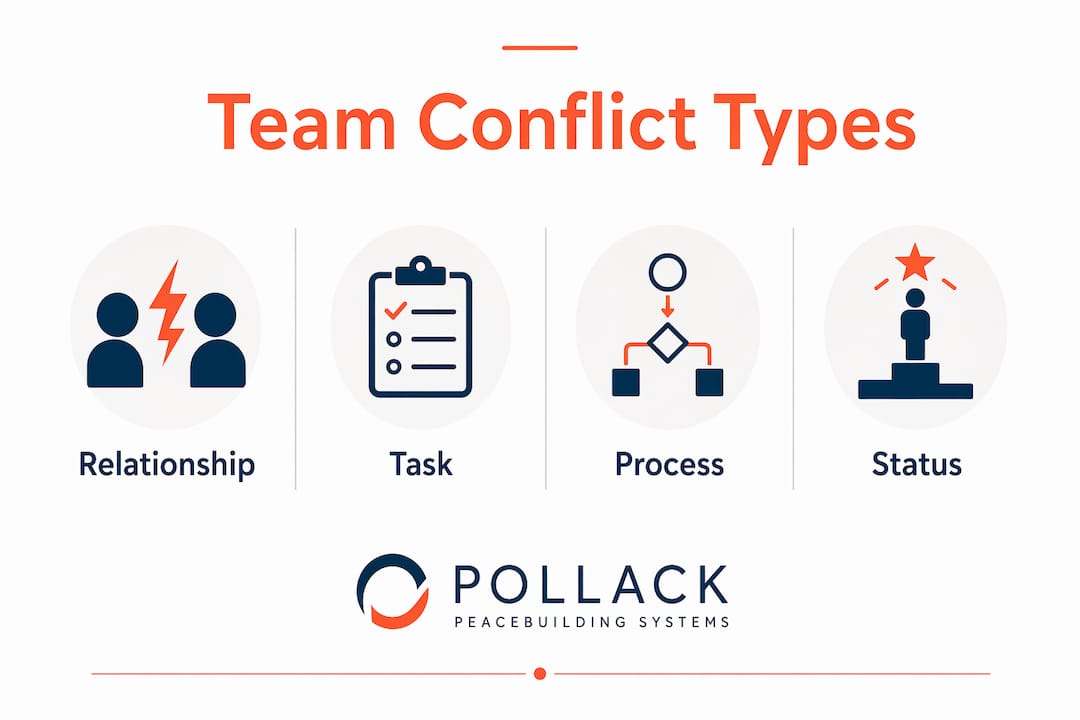
Team conflict falls into four distinct categories, and knowing which type you are dealing with changes how you respond.
Relationship conflict is the most damaging type. It involves personal friction between team members, including personality clashes, disrespect, or unresolved grievances. Relationship conflict is toxic and interpersonal by nature, while task conflict in moderation is actually healthy. Relationship conflict rarely resolves on its own. It tends to grow until it affects the entire team’s ability to function.
Task conflict centers on disagreements about goals, priorities, or the substance of work itself. When managed well, it pushes teams to examine assumptions and consider better solutions. The key word is “moderation.” A team that never disagrees about ideas is often a team that has stopped thinking critically.

Process conflict involves disputes about how work gets done, including role assignments, workflows, and decision-making authority. Process conflict concerns workflow and roles and is structurally resolvable. A clear RACI matrix or documented workflow often eliminates this type of conflict before it starts.
Status conflict arises from disagreements about power, influence, or hierarchy within the team. It shows up when team members compete for recognition, authority, or decision-making control. Status conflict is particularly common in newly formed teams or during organizational restructuring.
| Conflict type | Primary cause | Common example | Typical effect |
|---|---|---|---|
| Relationship | Personality clashes, disrespect | Two colleagues refusing to collaborate | Damaged morale, reduced trust |
| Task | Competing priorities, differing goals | Disagreement on project direction | Can improve decisions if moderate |
| Process | Unclear roles, workflow disputes | Confusion over who owns a deliverable | Inefficiency, frustration |
| Status | Power struggles, recognition gaps | Competing for team lead authority | Resentment, reduced cooperation |
Pro Tip: When a conflict feels personal but started over a work issue, it has likely shifted from task conflict to relationship conflict. Address the interpersonal dynamic directly rather than continuing to debate the original task.
How do team dynamics affect performance and communication?
The relationship between conflict and performance is not linear. Moderate levels of conflict optimize organizational performance, while too little or too much both produce worse outcomes. That finding matters because many leaders treat all conflict as a problem to eliminate. The goal is not zero conflict. The goal is the right kind, at the right level.
Team dynamics issues typically emerge from a predictable set of triggers. Common causes include unclear roles, personality clashes, and competing priorities, as well as communication breakdowns that allow small misunderstandings to grow into larger disputes. When team members do not know who owns a decision, they either fight over it or avoid it entirely.
The effects of unmanaged conflict in the workplace are measurable. Trust erodes. Communication becomes guarded. Team members start working around each other instead of with each other. High performers disengage or leave. These are not abstract risks. They are the predictable outcomes of conflict that goes unaddressed.
Common triggers that accelerate team dynamics issues include:
- Ambiguous roles and overlapping responsibilities
- Inconsistent communication from leadership
- Unequal workload distribution
- Unacknowledged contributions or recognition gaps
- Remote or hybrid work reducing informal connection
Pro Tip: Watch for the moment team members stop raising concerns in group settings. That silence often signals that relationship conflict has already taken hold and people no longer feel safe speaking up.
What are effective strategies for resolving team disputes?
Conflict resolution is an ongoing process that requires clear communication, understanding each person’s needs, documenting agreements, and following up consistently. A single conversation rarely closes a conflict permanently. You need a repeatable process.
Five core approaches to conflict management
- Direct communication. Bring the involved parties together in a structured conversation. Each person states their perspective without interruption. The goal is mutual understanding before problem-solving begins.
- Active listening. Require each party to restate what the other said before responding. This technique, often called reflective listening, slows the conversation and reduces reactive escalation.
- Neutral mediation. When direct communication fails, bring in a neutral third party to facilitate. Structured mediation resolves approximately 70% of workplace disputes where it is used. That resolution rate makes mediation one of the most reliable tools available for resolving team disputes.
- Documented agreements. After reaching resolution, write down what was agreed. Include specific behavioral commitments, not just general intentions. Vague agreements dissolve under pressure.
- Follow-up check-ins. Address conflicts within 24 hours of identification and schedule follow-up conversations within 2–4 weeks. Early action prevents escalation. Scheduled follow-ups create accountability.
Steps for managers conducting resolution conversations
- Open with a neutral framing: “I want to understand what’s happening so we can move forward together.”
- Give each person equal, uninterrupted time to speak.
- Identify the underlying need behind each position, not just the stated complaint.
- Co-create a solution rather than imposing one.
- Confirm next steps in writing before the meeting ends.
Preventing escalation requires building these habits before conflict appears. Teams with clear conflict resolution processes spend less time managing crises and more time doing productive work.
Pro Tip: Never mediate a conflict the same day it erupts. Give parties 30 to 60 minutes to regulate emotionally before sitting down together. Conversations held in the heat of the moment tend to produce more conflict, not less.
How can teams build a culture that prevents destructive conflict?
Preventing team conflict starts with structure. Role clarity is the single most effective structural intervention. When every team member knows what they own, what they do not own, and how decisions get made, the most common source of process and status conflict disappears.
Setting team norms early matters just as much. Norms are explicit agreements about how the team communicates, disagrees, and makes decisions. Teams that establish norms in their first few weeks together report fewer destructive disputes later. The conversation itself, not just the outcome, builds the psychological safety that makes honest communication possible.
Managers who catch friction early prevent conflict from becoming dysfunction. That means staying close enough to team dynamics to notice tension before it becomes a formal complaint. Regular one-on-ones, brief team retrospectives, and open-door communication all serve this function.
Practices that build a conflict-resistant team culture include:
- Documenting roles and decision rights at project kickoff
- Holding brief weekly check-ins focused on blockers and friction, not just status updates
- Training team members in workplace conflict prevention and communication skills
- Modeling direct, respectful feedback at the leadership level
- Using restorative conversations after conflicts resolve to rebuild trust
Emotional regulation is an underrated skill in this context. Team members who can name their emotional state and pause before reacting de-escalate situations before they require managerial intervention. Training in this area pays dividends across every type of team interaction, not just conflict.
Pro Tip: After a conflict resolves, schedule a brief “repair conversation” with the involved parties. Ask what each person learned and what they would do differently. This step rebuilds trust faster than simply moving on.
Key takeaways
Effective conflict management requires identifying the type of conflict early, intervening within 24 hours, and using structured processes like mediation, documented agreements, and follow-up check-ins to sustain resolution.
| Point | Details |
|---|---|
| Know the conflict type | Identify whether conflict is relational, task-based, process-based, or status-based before responding. |
| Act within 24 hours | Address disputes quickly to prevent escalation and protect team trust. |
| Use structured mediation | Mediation resolves approximately 70% of workplace disputes when applied consistently. |
| Document every agreement | Written commitments create accountability and reduce the chance of recurring disputes. |
| Build preventive culture | Role clarity, team norms, and regular check-ins reduce destructive conflict before it starts. |
What I’ve learned after years of working through team conflict
Most teams I work with do not have a conflict problem. They have a conflict avoidance problem. Leaders wait too long, hoping the tension will resolve itself. It rarely does. What starts as a task disagreement quietly becomes a relationship wound, and by the time it surfaces formally, the damage is already significant.
The distinction between conflict types is not academic. It is the most practical diagnostic tool a manager has. A team arguing about the best approach to a project needs a different response than a team where two members have stopped speaking. Treating both the same way produces poor outcomes in both cases.
The other thing I have seen consistently is that mediation skills are not just for HR professionals. Managers who learn to facilitate structured conversations, ask clarifying questions, and hold space for both parties without taking sides become the most effective conflict managers in any organization. That skill set is learnable. It does not require a law degree or a counseling background. It requires practice and a genuine commitment to hearing people out.
The teams that handle conflict best are not the ones that never disagree. They are the ones that have built enough trust to disagree openly, work through it, and come out stronger. Conflict is natural in teams managing diverse perspectives. The goal is to make it productive rather than destructive. That shift starts with leaders who take conflict seriously enough to address it early, consistently, and with skill.
How Pollack Peacebuilding Systems supports your team

Pollack Peacebuilding Systems works directly with organizations to reduce workplace friction, improve team communication, and build the internal capacity to manage conflict well. Whether your team needs structured mediation to resolve an active dispute or conflict management consulting to build long-term systems, the work is grounded in evidence-based frameworks and practical application. For leaders who want to sharpen their own skills, conflict and communication coaching provides personalized guidance on handling difficult conversations, managing team dynamics, and creating a culture where honest dialogue is the norm. Reach out to Pollack Peacebuilding Systems to find the right fit for your team’s needs.
Recommended
Frequently Asked Questions
Team conflict is disagreement among team members over tasks, roles, processes, or interpersonal issues that affects collaboration and performance. It falls into four main types: relationship, task, process, and status conflict.
The most common causes include unclear roles, competing priorities, personality clashes, and communication breakdowns. Structural issues like ambiguous decision rights and unequal workloads also generate recurring disputes.
Conflicts should be addressed within 24 hours of identification to prevent escalation. Follow-up conversations should be scheduled within 2–4 weeks to confirm that the resolution holds.
A manager should bring in a neutral mediator when direct communication between parties has failed or when the conflict involves a power imbalance that makes neutral facilitation difficult. Structured mediation resolves approximately 70% of workplace disputes where it is applied.
Yes. Moderate task conflict improves team performance by challenging assumptions and surfacing better solutions. The key is keeping disagreement focused on ideas and work rather than allowing it to become personal.