Peer conflict at work is defined as interpersonal disagreement between colleagues at the same organizational level, arising from communication breakdowns, competing priorities, unclear roles, or systemic organizational pressures. This is the standard term used in organizational psychology and HR practice, though you may also hear it called coworker conflict or employee conflict. Managers spend up to 40% of their time managing disputes, and unresolved conflicts drive high turnover and poor team morale. That figure alone signals how much peer conflict costs your organization. Understanding what is peer conflict at work, and why it happens, is the first step toward protecting your team’s performance and culture.
What is peer conflict at work, and why does it matter?
Peer conflict at work is not simply two people who dislike each other. It is a pattern of interpersonal friction between colleagues that, when left unaddressed, erodes collaboration, morale, and productivity. Miscommunication is the primary cause of peer-level workplace conflict, followed by competition for scarce resources and unclear roles. These are structural and communication problems, not personality defects.
The business impact is real and measurable. Unresolved peer disputes reduce output, increase absenteeism, and push talented employees out the door. When your team members are caught in a conflict loop, their energy goes toward managing the relationship rather than doing their jobs. Recognizing this early is what separates organizations that thrive from those that quietly bleed talent.
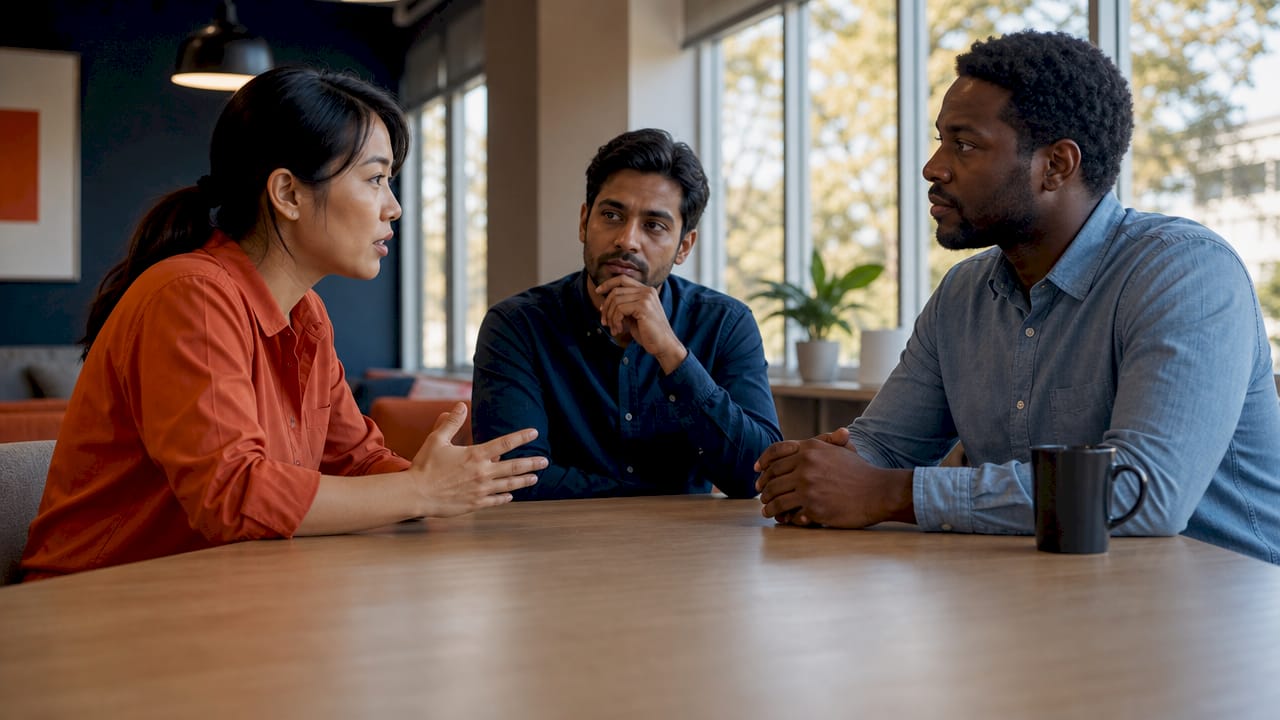
Peer conflict also signals something deeper. Peer conflict often signals systemic psychosocial hazards like role ambiguity and workload imbalance, meaning the conflict itself is a symptom of a broken system. Treating only the interpersonal friction without examining the organizational conditions that created it produces short-term relief and long-term recurrence.
What causes conflict between peers at work?
Most peer conflict does not start with bad intentions. It starts with conditions that make friction inevitable. Understanding those conditions gives you the leverage to prevent and resolve disputes before they escalate.
The most common causes include:
- Miscommunication. Ambiguous emails, missed context in virtual meetings, and assumptions about shared understanding all create fertile ground for conflict. A colleague who does not respond to a message may be overwhelmed, not dismissive, but the receiving party often interprets silence as disrespect.
- Role ambiguity. When two team members believe they own the same deliverable, conflict is almost guaranteed. Unclear job boundaries create competition where collaboration should exist.
- Competition for scarce resources. Budget, headcount, recognition, and leadership attention are finite. When colleagues compete for the same limited pool, tension builds quickly.
- Workload pressure and stress. High-stress environments lower tolerance for minor friction. A team running at 120% capacity will generate conflict that the same team at 80% capacity would absorb without incident.
- Organizational systems failures. Poor job design, inadequate HR processes, and the absence of clear escalation paths all create conditions where conflict festers. Investigating organizational systems is necessary to prevent recurrence.
Pro Tip: Before labeling a conflict as a “personality clash,” audit the organizational conditions first. Ask whether role boundaries are clear, whether workloads are balanced, and whether communication norms are explicit. The answer usually reveals a systems problem, not a people problem.
You can find practical examples of peer conflict scenarios that illustrate how these causes play out across different team structures and industries.
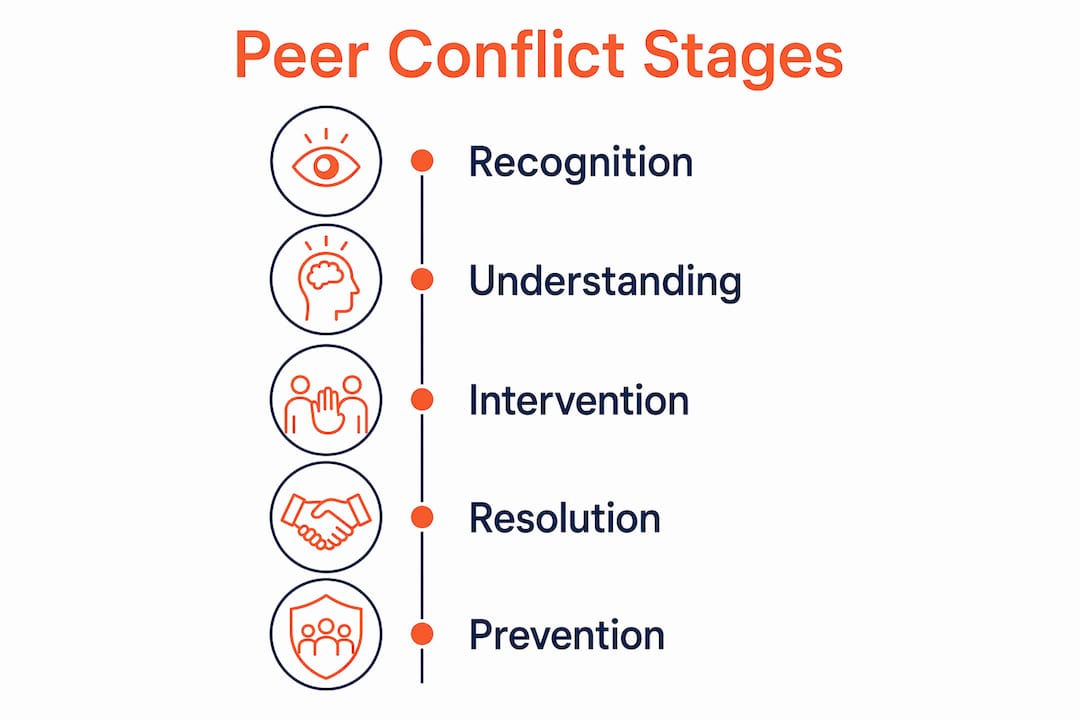
How can managers and HR detect early warning signs?
Early detection is the most underused tool in conflict management. By the time a dispute reaches HR formally, it has usually been festering for weeks or months. The warning signs appear much earlier, and they are visible if you know what to look for.
Watch for these indicators in your team:
- Reduced collaboration. Team members who previously worked well together stop volunteering to partner on projects or avoid joint meetings.
- Withdrawal and disengagement. One or both parties become quieter in group settings, contribute less, or begin missing optional team activities.
- Passive-aggressive behavior. Sarcasm, eye-rolling, delayed responses, and backhanded compliments are all forms of conflict expressed indirectly.
- Morale dips in the surrounding team. Peer conflict rarely stays contained. Colleagues who witness ongoing friction often feel anxious, choose sides, or disengage themselves.
- Recurring conflict loops. Peer conflicts often create recurring conflict loops where blame reinforces defensiveness. When you see the same argument cycling without resolution, that loop is a clear signal that the conflict has moved beyond a simple task disagreement.
The distinction between healthy and unhealthy conflict matters here. Healthy conflict is constructive debate where colleagues challenge ideas, push back on assumptions, and reach better decisions together. Unhealthy conflict is a persistent discord where the relationship itself becomes the battleground. Your job as a leader is to protect the former and interrupt the latter.
When should managers intervene, and what approaches work best?
Timing is everything in conflict intervention. Acting too early can undermine the autonomy of capable adults. Acting too late allows the conflict to calcify into something much harder to resolve.
A practical framework for intervention looks like this:
- Observe before acting. Give colleagues 24–48 hours to address minor friction themselves. Many workplace disagreements resolve without management involvement when both parties have the space to cool down and reconnect.
- Intervene when the conflict loop appears. If the same issue resurfaces more than twice, or if you observe withdrawal and morale impact in the broader team, step in. Waiting longer rarely helps.
- Start with individual conversations. Meet with each party separately before bringing them together. This gives you an accurate picture of both perspectives without triggering defensiveness in a joint setting.
- Use active listening to de-escalate. The first three minutes of conflict conversations are critical. Starting with criticism or accusations reduces the likelihood of resolution significantly. Open with curiosity, not judgment.
- Match your style to the situation. No single conflict management style is universally best. Strategic flexibility, knowing when to use avoiding, collaborating, compromising, or accommodating, produces the best outcomes. A low-stakes dispute may warrant accommodation. A high-stakes values conflict may require structured mediation.
Pro Tip: Many managers treat peer conflict like a task problem: identify the issue, assign a fix, close the ticket. Columbia University research shows that conflicts often involve emotional and relational issues requiring fundamentally different resolution approaches. The fix is rarely a policy update. It is a conversation.
For a structured approach, Pollack Peacebuilding Systems offers conflict resolution strategies that walk managers through each stage of intervention with practical steps.
What strategies and communication techniques prevent and resolve peer conflict?
Prevention is more cost-effective than resolution. The organizations that manage peer conflict well are not the ones with the best HR response protocols. They are the ones that build conditions where conflict is less likely to escalate in the first place.
Build structural clarity
Clear role definitions are the single most effective structural prevention tool. When every team member knows what they own, what their colleagues own, and how decisions get made, the most common source of peer friction disappears. Conduct a role clarity audit annually, especially after reorganizations or team expansions.
Build a culture of dignity and timely feedback
Effective leadership communication, a culture of dignity and respect, and clear HR policies reduce workplace conflict occurrence. Culture is not a values statement on a wall. It is the behavior leaders model every day. When managers address friction early and directly, they signal that conflict is manageable, not shameful.
Apply active listening techniques
Active listening, including paraphrasing and reflecting feelings, improves conflict resolution effectiveness by about 40%. That is a significant gain from a skill that costs nothing to develop. Paraphrasing means restating what you heard in your own words before responding. Reflecting feelings means naming the emotion you observe: “It sounds like you felt excluded from that decision.” Both techniques slow the conversation down and reduce defensiveness.
You can deepen your team’s capability with resources on active listening skills that cover practical techniques for conflict conversations.
Use win-win resolution frameworks
The biggest mistake in conflict resolution is treating it as something to win. Harvard Program on Negotiation research shows that effective resolution uncovers underlying interests rather than splitting the difference. When two colleagues argue over project ownership, the real interests are often recognition, autonomy, and workload fairness. Addressing those interests creates solutions that hold.
Invest in training and HR policy development
Conflict resolution skills do not develop naturally in most workplaces. They require deliberate training, clear escalation protocols, and HR policies that normalize early intervention. Organizations that treat conflict management as a leadership competency, not a crisis response, see lower turnover and stronger team cohesion over time. Explore conflict prevention strategies that HR teams can implement across departments.
Key Takeaways
Peer conflict at work is a systemic issue rooted in communication breakdowns, role ambiguity, and organizational conditions, and it requires structured, relationship-focused intervention to resolve durably.
| Point | Details |
|---|---|
| Peer conflict has systemic roots | Most disputes stem from unclear roles, miscommunication, and workload pressure, not personal animosity. |
| Early detection prevents escalation | Watch for withdrawal, morale dips, and recurring conflict loops before disputes reach HR formally. |
| Timing of intervention matters | Intervene within 24–48 hours of a recurring conflict loop; individual conversations before joint meetings work best. |
| Active listening drives resolution | Paraphrasing and reflecting feelings improve conflict resolution effectiveness by about 40%. |
| Prevention requires structural investment | Role clarity, dignity culture, and conflict management training reduce conflict occurrence at the organizational level. |
What I have learned about peer conflict after years in the field
After working with hundreds of organizations across industries, the pattern I see most often is this: leaders wait too long, then intervene too hard. They absorb the early warning signs, tell themselves the team will work it out, and then step in with a heavy hand once the conflict has become a full organizational disruption. Both instincts are understandable. Neither is effective.
The insight that changed how I approach this work came from recognizing that most peer conflicts are not really about the presenting issue. Two colleagues fighting over project credit are rarely fighting about the project. They are fighting about recognition, fairness, and whether their contributions matter. Until you address those underlying interests, any resolution you broker will be temporary.
I have also seen how destructive it is to treat conflict as a problem to eliminate rather than a signal to interpret. Conflict tells you something about your organization. It tells you where roles are unclear, where workloads are unsustainable, and where communication norms have broken down. The organizations that improve fastest are the ones that get curious about their conflict patterns rather than embarrassed by them.
Strategic flexibility is the skill I wish more managers developed earlier. Knowing when to step back and let colleagues resolve their own friction, when to facilitate a structured conversation, and when to bring in a neutral third party is not instinctive. It is learned. And it is the difference between a conflict that resolves and one that recurs.
Finally, the most durable resolution I have ever seen came not from a perfect compromise but from a conversation where both parties felt genuinely heard. That is the goal. Not agreement on every point, but a relationship strong enough to handle future disagreement.
— Conflict Resolution Expert | Jeremy Pollack, Ph.D.
How Pollack Peacebuilding Systems supports organizations facing peer conflict
Peer conflict does not resolve itself. It requires skilled facilitation, clear communication frameworks, and sometimes a neutral third party to interrupt the patterns that keep teams stuck.
Pollack Peacebuilding Systems works directly with HR leaders, managers, and executives to address workplace peer conflict through mediation, conflict coaching, and communication training. Whether your team needs online workplace mediation to resolve an active dispute or executive communication training to build long-term conflict management capability, Pollack Peacebuilding Systems provides evidence-based support tailored to your organization’s specific dynamics. For teams dealing with deeper systemic issues, organizational systems design services address the structural conditions that generate recurring conflict. Reach out to start a conversation about what your team needs.
FAQ
What is the definition of peer conflict at work?
Peer conflict at work is interpersonal disagreement between colleagues at the same organizational level, typically caused by miscommunication, unclear roles, or competition for resources. It differs from manager-employee conflict in that no formal authority relationship exists between the parties.
What are the most common examples of peer conflict?
Common examples include disputes over project ownership, credit for shared work, communication styles, workload distribution, and access to shared resources like budget or leadership attention. These conflicts often start as minor friction and escalate when left unaddressed.
How do you resolve peer conflict effectively?
Effective resolution starts with individual conversations to understand each party’s perspective, followed by a facilitated joint discussion using active listening techniques. Active listening improves resolution effectiveness by about 40%, making it the highest-return communication skill managers can develop.
When should HR get involved in a peer conflict?
HR involvement is appropriate when a conflict recurs after initial management intervention, when it involves potential policy violations, or when the parties cannot reach resolution independently. Early HR involvement in a coaching capacity, rather than a disciplinary one, produces better outcomes.
What is the difference between healthy and unhealthy peer conflict?
Healthy conflict is constructive debate that challenges ideas and improves decisions. Unhealthy conflict is persistent interpersonal discord where the relationship itself becomes the source of ongoing disruption. Strategic flexibility in conflict management style helps leaders distinguish between the two and respond appropriately.